


Table of Contents
- Why Skin Changes in Your 50s (and How Your Routine Should Adapt)
- The 3 Pillars of a Natural Anti Aging Routine for Over 50
- Best Natural Ingredients for Mature Skin (and What to Avoid)
- How to Hydrate Aging Skin Naturally, Inside and Out
- A Simple Skincare Routine for 50s: Morning and Night Steps
- Lifestyle Habits That Accelerate Aging (and What to Do Instead)
- Building Your Natural Anti Aging Routine: A Practical Checklist
- Conclusion
- Frequently Asked Questions
Last Updated: September 6, 2026
Why Skin Changes in Your 50s (and How Your Routine Should Adapt)
A natural anti aging routine for over 50 must account for the fact that your skin is not the same organ it was a decade ago. The most significant shift is hormonal: as estrogen declines during and after menopause, the skin produces less collagen and elastin, which directly impacts firmness and elasticity. Cell turnover also slows, meaning dead skin cells linger on the surface and contribute to a duller, rougher skin texture.
The result is that mature skin becomes thinner, drier, and more susceptible to visible fine lines and hyperpigmentation. Your skin barrier, the protective outer layer that locks in moisture, also weakens with age. This explains why products that once felt comfortable now leave your face feeling tight or irritated.
At Djanillie's Beauté, we formulate with these changes in mind. The goal of a natural anti aging routine is not to fight the clock but to support your skin's changing biology with ingredients that replenish what time depletes. This guide covers essential steps, natural ingredients, and lifestyle habits for skin in its 50s.

The 3 Pillars of a Natural Anti Aging Routine for Over 50
A natural anti aging routine for over 50 rests on three non-negotiable pillars: barrier support, targeted treatment, and daily protection. Most routines fail because they over-focus on one pillar, often treatment with strong actives, while neglecting the other two.
Pillar 1: Barrier Support. A healthy skin barrier retains moisture and defends against irritants. For mature skin, this means using a non-drying cleanser and a nourishing moisturizer rich in ceramides, glycerin, and fatty acids. Without this foundation, any other active ingredient you apply will cause more harm than good.
Pillar 2: Targeted Treatment. This pillar addresses the specific concerns of aging skin: fine lines, age spots, and loss of firmness. Natural sources of retinol, like bakuchiol, and antioxidants such as vitamin C are the workhorses here. They stimulate collagen production and brighten skin tone without the harshness of some synthetic alternatives.
Pillar 3: Daily Protection. Sun damage is the leading cause of premature aging (the WHO). A broad-spectrum sunscreen with SPF 30+ applied every morning is the single most effective preventative step in any natural anti aging routine.
Best Natural Ingredients for Mature Skin (and What to Avoid)
The term "natural" in skincare is not regulated by the FDA, so it often means little more than "contains a plant extract." For a clinically effective natural anti aging routine for over 50, the focus must be on bio-identical or plant-derived compounds with peer-reviewed evidence for specific actions on aging skin. Here is what matters, why it matters, and how to read past the marketing.
Ingredients that address hormonal decline:
- Bakuchiol (from Psoralea corylifolia): This is the most studied natural alternative to retinol. It works by modulating retinoic acid receptor genes, which stimulates collagen production and accelerates cell turnover. Unlike retinol, it does not cause the irritation or photosensitivity that often makes synthetic retinoids intolerable for thinning, post-menopausal skin. Look for a 0.5% to 1% concentration in a serum or cream.
- Phytoestrogens (from Soy, Red Clover, or Flaxseed): Estrogen decline is the primary driver of skin aging in your 50s. Phytoestrogens are plant compounds that weakly bind to estrogen receptors in the skin, helping to mitigate the loss of collagen and hyaluronic acid. Topical soy extract, in particular, has been shown to improve skin thickness and elasticity in peri- and post-menopausal women.
- Coenzyme Q10 (CoQ10): This antioxidant is produced naturally in the body but declines with age. It is essential for cellular energy production, which slows dramatically after 50. Topical CoQ10 penetrates the upper layers of skin and helps protect against oxidative stress that degrades collagen. It is most effective when combined with vitamin E.
Ingredients that support the barrier and hydration:
- Ceramides (often derived from plants): After menopause, the skin's natural ceramide levels drop by up to 30%, leading to transepidermal water loss and a compromised barrier (PubMed). Look for formulas that list ceramide NP, AP, or EOP in the first half of the ingredient list. These are bio-identical to human ceramides and physically rebuild the lipid matrix between skin cells.
- Glycerin and Hyaluronic Acid: These are humectants that draw water from the dermis and the environment into the stratum corneum. For mature skin, glycerin is often more effective than hyaluronic acid because it is a smaller molecule that penetrates deeper. A concentration of 5-10% glycerin is the clinical sweet spot.
- Squalane (from Olive or Sugarcane): This is a stable, non-comedogenic oil that mimics the skin's own sebum. It is an occlusive that prevents water loss and is particularly valuable for skin that produces less oil after 50.
Ingredients to approach with caution:
- Essential Oils (Citrus, Peppermint, Eucalyptus): These are frequent irritants and allergens. Citrus oils like bergamot and lime are phototoxic and can cause hyperpigmentation when exposed to UV light, which is the opposite of your anti-aging goal. The FDA does not require safety testing for these in cosmetics, so "natural" does not equal "safe."
- High-Concentration Vitamin C (L-Ascorbic Acid above 15%): While effective, this form is acidic (pH < 3.5) and can cause stinging on thin, mature skin. A 10% concentration is often sufficient and better tolerated. If irritation occurs, consider a derivative like magnesium ascorbyl phosphate, which is gentler.
- Fragrance (even "natural" fragrance): Any fragrance, natural or synthetic, is a potential allergen. On a weakened barrier, fragrance can trigger inflammation, which accelerates collagen breakdown. Choose fragrance-free formulations for your daily routine.
A practical note on concentration: A common pattern in the natural skincare space is to include an active ingredient at a "trace" level so it can be listed on the label without providing any real benefit. For bakuchiol, look for it in the first five ingredients. For CoQ10, it should appear before any preservatives. If an ingredient is listed after the fragrance or preservatives, it is likely there for marketing, not efficacy.
How to Hydrate Aging Skin Naturally, Inside and Out
Hydration for mature skin is a two-part process: you must both replenish moisture topically and support your body's internal hydration systems. A natural anti aging routine that ignores diet will always fall short of its potential.
Inside: Water alone is not enough. Your skin needs essential fatty acids and antioxidants to maintain its lipid barrier. Incorporate foods rich in omega-3s, like salmon and walnuts, and colorful vegetables high in vitamins A and C. These nutrients support collagen production from within and help protect against oxidative stress.
Outside: The key to topical hydration is layering humectants and occlusives. Start with a water-based serum containing hyaluronic acid or glycerin to pull moisture into the skin. Immediately follow with a richer moisturizer or facial oil to seal that hydration in and prevent water loss.
The Djanillie's Beauté Nutri-Lux Total Therapy Creme is formulated to deliver this dual action, combining barrier-supporting lipids with deep moisturizing agents to rebalance and nourish mature skin.

A Simple Skincare Routine for 50s: Morning and Night Steps
A simple skincare routine for 50s does not require a dozen products. It requires the right products used consistently. The following five-step routine is designed to be easy to follow and highly effective.
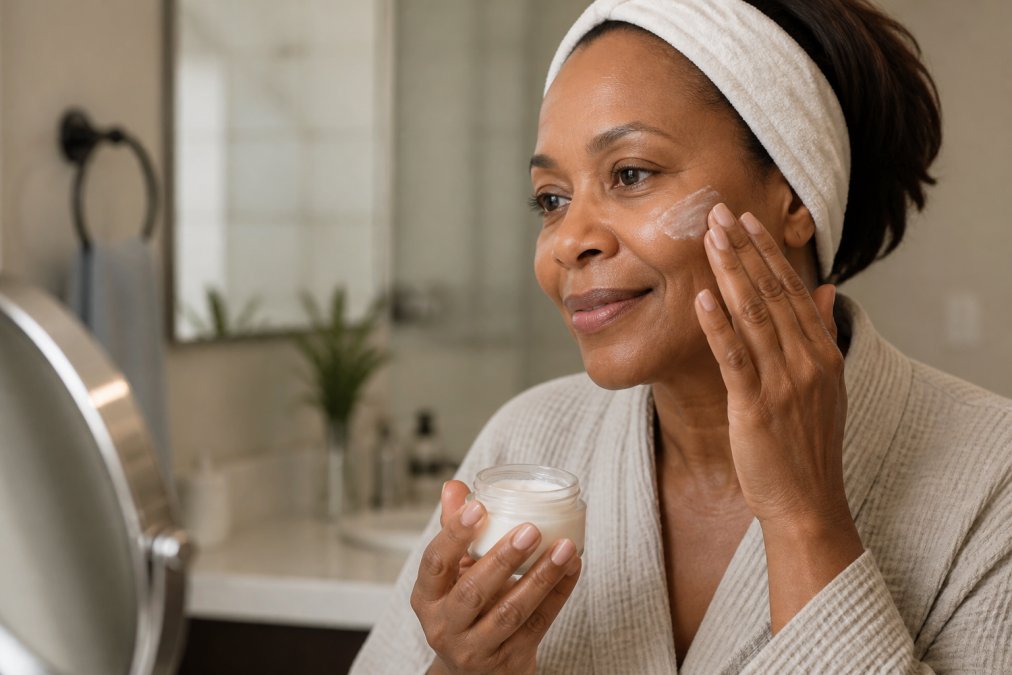
Morning Routine:
- Cleanse: Use a gentle, non-drying cleanser to remove overnight buildup without stripping the skin barrier. The Djanillie's Beauté Pure Radiance Anti-Aging Cleanser is a good choice for this step.
- Treat: Apply a vitamin C serum to brighten skin tone and protect against environmental stressors.
- Moisturize: Use a lightweight, hydrating moisturizer to prep the skin.
- Protect: Finish with a broad-spectrum sunscreen of SPF 30+. This step is non-negotiable.
Night Routine:
- Cleanse: Wash your face to remove makeup, SPF, and the day's dirt.
- Treat: On alternating nights, use a retinol or bakuchiol product to stimulate cell turnover and collagen production. The Djanillie's Beauté Retinol 0.5 Resurfacer is designed to address fine lines and improve skin texture.
- Moisturize: Apply a richer, more occlusive night cream to support the skin's overnight repair process. The Absolute Repair Anti-Aging Night Creme is formulated for this purpose.
| Step | Morning | Night | Key Purpose |
|---|---|---|---|
| 1. Cleanse | Gentle cleanser | Gentle cleanser | Remove impurities without stripping |
| 2. Treat | Vitamin C serum | Retinol/bakuchiol (alternate nights) | Brighten, boost collagen, smooth lines |
| 3. Moisturize | Lightweight lotion | Rich night cream | Support barrier, lock in hydration |
| 4. Protect | SPF 30+ sunscreen | N/A | Prevent UV damage and hyperpigmentation |
Lifestyle Habits That Accelerate Aging (and What to Do Instead)
Topical products are only half of the equation. A natural anti aging routine for over 50 must be supported by lifestyle choices, as certain daily habits can visibly accelerate the aging process. The most significant culprit is unprotected sun exposure, which breaks down collagen and leads to hyperpigmentation and fine lines. The solution is consistent use of a broad-spectrum SPF 30+ sunscreen, even on cloudy days.

Another major factor is poor sleep. During deep sleep, your body produces growth hormone, which is essential for cell repair and collagen production. Chronic sleep deprivation raises cortisol levels, a stress hormone that can break down skin collagen and exacerbate inflammation. Prioritizing seven to eight hours of quality sleep is a powerful, cost-free anti-aging strategy.
Diet plays a critical role as well. High sugar intake leads to a process called glycation, where sugar molecules bind to collagen and make it stiff and brittle. Instead, focus on a diet rich in antioxidants and omega-3 fatty acids, which help fight inflammation and support skin elasticity. Regular exercise also improves circulation, delivering oxygen and nutrients to skin cells for a healthier, more radiant complexion.
Building Your Natural Anti Aging Routine: A Practical Checklist
Building a natural anti aging routine is less about finding a miracle product and more about consistency and correct layering. Use this checklist to evaluate your current routine and identify gaps.
Barrier Health & Cleansing:
- I use a gentle, non-drying cleanser that does not leave my skin feeling tight.
- My moisturizer contains barrier-supporting ingredients like ceramides or glycerin.
Targeted Treatment & Concerns:
- I use a vitamin C serum in the morning for antioxidant protection and brightening.
- I use a retinol or bakuchiol product at night to address fine lines and boost collagen.
- I have a targeted serum to address hyperpigmentation and age spots. The Djanillie's Beauté Luminate Corrective Serum is designed for this purpose.
Sun Protection & Prevention:
- I apply an SPF 30+ sunscreen every morning, rain or shine.
- I reapply sunscreen if I am outdoors for extended periods.
Lifestyle & Nutrition:
- I am protecting my skin from the sun with hats and shade.
- My diet includes sources of omega-3s and antioxidants.
- I am consistently getting seven to eight hours of sleep.
If you checked every box, your routine is on solid ground. If you missed a few, start by fixing the basics: a gentle cleanser, a nourishing moisturizer, and daily SPF. The American Academy of Dermatology offers guidance on building a skincare routine for mature skin that supports this approach. Add targeted treatments like retinol and vitamin C only once your barrier is healthy and resilient.
Conclusion
Building an effective natural anti aging routine for over 50 is not about chasing every new trend. It is about understanding the specific biological changes your skin is undergoing, hormonal shifts, slower cell turnover, and a weakened skin barrier, and responding with a consistent, targeted approach. By focusing on the three pillars of barrier support, treatment, and protection, and by choosing proven natural ingredients, you can visibly improve your skin's texture, tone, and firmness.
The most important step is simply to begin. Start with the basics of cleansing, moisturizing, and daily SPF. Once those habits are solid, introduce a nightly retinol and a morning vitamin C serum to target fine lines and hyperpigmentation. For a complete, barrier-supporting system, explore the anti-aging skincare line from Djanillie's Beauté, which combines advanced formulations with carefully curated natural ingredients to nurture and rebalance mature skin. Get started with Djanillie's Beauté and build a routine that supports your skin.
Frequently Asked Questions
What is the best natural anti aging routine for over 50?
The best natural anti aging routine for over 50 focuses on three pillars: gentle cleansing, deep hydration, and barrier support. A simple routine includes a non-drying cleanser, a hydrating serum with ingredients like hyaluronic acid and glycerin, and a rich moisturizer with ceramides and facial oils. Sunscreen with SPF 30+ is non-negotiable every morning. At night, you can add a natural retinol alternative or bakuchiol serum to support cell turnover and collagen production without irritation.
How does skin change after 50 and how should my routine adapt?
After 50, estrogen levels drop, which slows collagen production and reduces oil production. This leads to thinner skin, more visible fine lines, and increased dryness. Your routine should adapt by swapping foaming cleansers for cream or oil-based ones, layering hydrating toners and serums, and using a heavier moisturizer to prevent transepidermal water loss. You also need to be gentler with exfoliation and prioritize barrier-supporting ingredients to keep skin calm and resilient.
Can natural skincare effectively reduce the appearance of fine lines?
Yes, certain natural ingredients have clinical evidence for reducing fine lines. Bakuchiol, a plant-based retinol alternative, has been shown to improve fine lines and elasticity with less irritation. Vitamin C is a potent antioxidant that supports collagen production and brightens skin tone. Peptides and botanical oils like rosehip and jojoba also help nourish the skin barrier, which plumps the skin and makes fine lines less noticeable. Consistency over several months is key to seeing visible results.
How can I simplify my skincare routine while maintaining results?
A streamlined routine for your 50s only needs four steps. In the morning: cleanse with water or a gentle cleanser, apply a vitamin C serum, moisturize, and finish with SPF 30+. At night: cleanse to remove sunscreen and impurities, then apply a richer night cream with peptides or bakuchiol. This routine covers the essentials: antioxidant protection, hydration, barrier repair, and cell turnover. You can skip toners, essences, and masks without losing significant benefits.
What is the role of hydration in an anti-aging routine for over 50?
Hydration is the foundation of any anti-aging routine for over 50. As skin ages, it produces less hyaluronic acid and ceramides, making it harder to retain moisture. Dehydrated skin shows fine lines more prominently and looks dull. Using humectants like glycerin and hyaluronic acid draws water into the skin, while occlusives like shea butter and facial oils seal it in. A well-hydrated skin barrier also functions better, protecting against irritants and environmental damage.
Are there specific natural oils recommended for aging skin?
Several natural oils are excellent for aging skin. Rosehip seed oil is rich in vitamin A and essential fatty acids, which support skin regeneration and improve elasticity. Jojoba oil closely mimics human sebum, making it a great moisturizer that won't clog pores. Marula and squalane oils are lightweight and high in antioxidants. For very dry skin, shea butter provides a thick, protective layer. Apply oils last in your routine to lock in all the hydrating layers beneath.