


Table of Contents
- Building a Gentle Daily Skincare Routine
- The 3 Minute Rule for Moisturizing: Timing That Matters
- Eczema Trigger Identification: Finding What Flares Your Child's Skin
- Natural Eczema Remedies for Babies: Safe Options and Precautions
- Bathing Techniques and Clothing Choices That Calm the Skin
- When to See a Pediatric Dermatologist
- Frequently Asked Questions
Last Updated: September 14, 2026
Building a Gentle Daily Skincare Routine
Eczema in children is a chronic inflammatory condition where the skin barrier fails to hold moisture and block irritants, causing itching, redness, and flare-ups, and knowing how to treat eczema in children naturally begins with understanding that barrier. Learning how to treat eczema in children naturally starts with one principle: consistency beats intensity.
The routine is short: a lukewarm bath, a fragrance-free cleanser, a thick moisturizer within minutes of patting dry, and soft cotton against the skin. Repeat it even on good skin days, prevention is where natural eczema care works.
Choosing Fragrance-Free Cleansers and Moisturizers
Read the label before the marketing. "Natural" does not mean gentle, and many botanical extracts are allergens. Look for fragrance-free (not "unscented," which can mask fragrance with more fragrance), hypoallergenic, and non-soap cleansers that won't strip the skin's natural acidity.
For moisturizers, thicker is better: an emollient or ointment seals the skin barrier better than a thin lotion. Look for colloidal oatmeal, ceramides, shea butter, and glycerin, and skip essential oils, dyes, or alcohol high on the list.
A common mistake is switching products too fast. Give any new cleanser or moisturizer two weeks of consistent use before deciding it doesn't work.
The 3 Minute Rule for Moisturizing: Timing That Matters
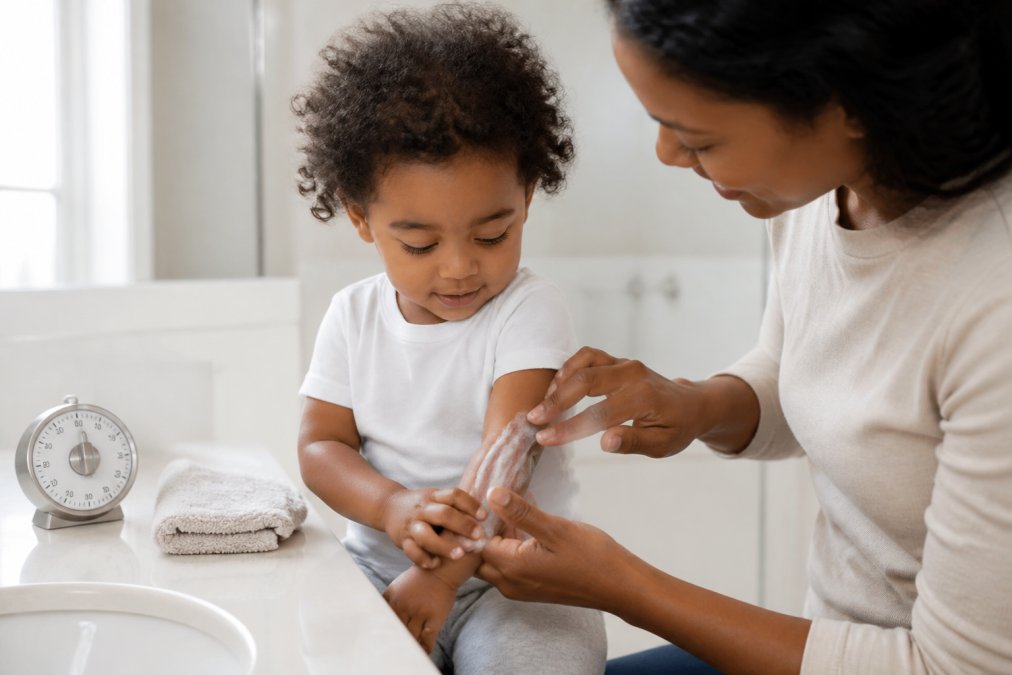
The 3 minute rule for moisturizing means applying moisturizer within three minutes of your child leaving the bath, while the skin is still damp. It's the highest-impact habit in natural eczema care, and most parents miss it.
Bathing pulls water into the outer skin layer, but it evaporates within minutes and takes the skin's own moisture with it. Sealing it in with an emollient while damp traps that hydration; wait twenty minutes and you're moisturizing dry skin instead.
Eczema Trigger Identification: Finding What Flares Your Child's Skin
Trigger identification means tracking what your child's skin was exposed to in the 24 to 72 hours before a flare-up, so you can remove suspects one at a time. No parent can guess this from memory, you need a written log.
Track four things daily: foods eaten, fabrics worn, soaps or detergents used, and weather or humidity. When a flare appears, look back one day, not one hour. Eczema reactions are often delayed, which is why so many parents blame the wrong thing.
The Trigger Log: What to Actually Write Down
A trigger log only works if it takes under 60 seconds to fill out. Use a notes app or a paper chart on the fridge with five columns:
| Date | Food / drink | Skin contact (soap, detergent, lotion) | Clothing & bedding | Weather / humidity |
|---|---|---|---|---|
| 3/14 | Oatmeal, banana, milk | Fragrance-free detergent, ceramide cream | Cotton onesie, cotton sheets | 68°F, 32% humidity |
| 3/15 | Added peanut butter | Same | Same | 70°F, 28% humidity |
| 3/16 | Same | Same | New wool sweater over cotton | 72°F, 30% humidity |
When a flare shows up on 3/16, look back at 3/14 and 3/15, not just the morning of. A new food can take 24 to 48 hours to surface, and a new detergent even longer because it stays in the fabric through several washes.
The One-at-a-Time Rule
Change one variable at a time, and give each change at least two weeks before judging it. Swap detergent, add a new food, and buy a new cream in the same week, and you learn nothing when the skin changes.
A practical order that most families find works:
- Laundry detergent first. Switch to a fragrance-free, dye-free formula, it touches every piece of clothing and bedding, so it has the widest reach of any single change.
- Soaps and bubble baths second. Drop anything with fragrance, dyes, or harsh surfactants. Bubble baths strip the skin barrier and are a frequent hidden culprit.
- Fabrics third. Move to cotton against the skin. Wool and many synthetics scratch and trap heat.
- Foods last, only with a pediatrician's guidance. Food triggers are real but far less common than parents assume, and eliminating foods alone can compromise a child's nutrition.
Common Irritants and Allergens at Home
The usual suspects at home:
- Laundry detergent with fragrance or dyes, which stays in fabric fibers through multiple wash cycles
- Wool and synthetic fabrics that scratch and trap heat
- Pet dander and dust mites, especially in bedding and stuffed toys
- Harsh soaps and bubble baths that strip the skin barrier
- Scented lotions, candles, and air fresheners
- Chlorinated pool water and heavily chlorinated tap water, which can dry and irritate skin
- Saliva and food residue around the mouth and on the hands, a common trigger in toddlers
Environmental Triggers: Heat, Sweat, and Dry Air
Two environmental triggers get overlooked most: sweat and low humidity.
Sweat left on the skin for even 20 to 30 minutes can trigger itching. A winter coat, car seat, or long nap in a warm room can set off a flare, so dress your child in removable layers and change out of damp clothing after play.
Indoor air in winter often drops below 30% humidity, pulling moisture out of already-compromised skin (the EPA). Target 40% to 50% relative humidity with a bedroom humidifier; above 60% encourages dust mites and mold, so a cheap hygrometer is worth it.
When the Log Points to Nothing
Sometimes the log comes back clean, no pattern, no single trigger. That's common, and usually means flares are driven by the skin barrier itself rather than an external irritant. Then the routine matters more than the detective work: consistent moisturizing, gentle bathing, and a talk with your pediatrician about whether prescription treatment is needed to break the cycle.
Natural Eczema Remedies for Babies: Safe Options and Precautions
Natural eczema remedies for babies require more caution than for older children, because an infant's skin is thinner and absorbs more. Safe options include colloidal oatmeal baths, plain lukewarm water soaks, and simple single-ingredient oils.
Coconut oil and sunflower seed oil are the most commonly recommended oils for infant skin. Coconut oil has mild antibacterial properties; sunflower seed oil supports the skin barrier. Apply either sparingly after a bath, and stop if you see new redness.
A dilute vinegar soak can help with weeping or infected-looking patches, but it must be heavily diluted and never applied to broken skin. A cool compress is the safest immediate response to an itch flare.
Patch Testing and Safety Warnings
Never apply a new remedy to your child's whole body on day one.
Skip essential oils entirely on infants. Tea tree, lavender, and citrus oils are common allergens and irritants on young skin, no matter how natural they sound.
Bathing Techniques and Clothing Choices That Calm the Skin
Bathing should calm the skin, not clean it aggressively. Done right, a bath is your best daily chance to put water into your child's skin; done wrong, it strips the barrier and sets up hours of itch.
Water Temperature, Duration, and Frequency
Aim for lukewarm water between 90°F and 100°F, a comfortably warm bath you'd sit in yourself (How to Treat & Control Eczema (Atopic Dermatitis) Rashes in Children). Hot water feels good on an itch, then makes it worse by pulling oils out of the skin and triggering histamine release.
Keep baths to five to ten minutes; longer soaks, especially with soap, break down the skin barrier (the American Academy of Dermatology). For most children with eczema, a daily bath is fine and often helpful, a short daily bath followed immediately by moisturizer is one of the best ways to hydrate skin.
Use a fragrance-free, non-soap cleanser and only where it's needed, face, hands, groin, and feet. The rest of the body usually just needs a rinse. Skip bubble baths entirely.
The Post-Bath Window
Pat, don't rub, dry with a soft towel, leaving the skin slightly damp, then apply moisturizer within three minutes. Treat bath time and moisturizing time as one continuous routine, not two separate chores.
Wet Wrap Therapy: When the Skin Needs More
For severe flares, some pediatric dermatologists recommend wet wrap therapy, moisturizer, then a damp cotton layer, then a dry layer, left on for a few hours or overnight. It pushes hydration in and reduces scratching, but it isn't a do-it-yourself first step: wrapping too tightly or too long can cause problems. If your pediatrician suggests it, ask about hours, fabric, and whether a topical medication goes underneath.
Clothing: Fabric, Weight, and Fit
Dress your child in breathable fabrics, starting with a cotton layer against the skin. Cotton wicks moisture and doesn't scratch. Here's how to think about the rest:
- Cotton, best first layer. Smooth, breathable, low-irritation.
- Bamboo and Tencel, often well tolerated, soft and moisture-wicking, though pricier.
- Wool, can be worn as an outer layer, but rarely against eczema-prone skin. Even soft merino irritates some children.
- Polyester and nylon, trap heat and sweat. Fine as an outer shell, poor as a base layer.
- Blends, check the label. A 60/40 cotton-poly blend behaves more like polyester than like cotton.
Fit matters as much as fabric. Snug waistbands, tight cuffs, and scratchy seams create friction points where eczema flares. Cut tags out of shirts, and wash new clothing before the first wear to remove manufacturing residues.
Bedding and Sleep
Nighttime is when most scratching happens, and bedding is a big part of why. Use cotton sheets washed weekly in fragrance-free detergent, skip heavy comforters and synthetic blankets that trap heat, and keep the bedroom around 65°F to 68°F to reduce sweating and itching overnight.
Cotton pajamas that cover the arms and legs reduce skin-on-skin scratching. For children who scratch hard at night, soft cotton mittens or socks over the hands can help without feeling punitive.
Humidity and Air
A humidifier in the bedroom helps in dry months and shows up in the skin within a week. Target 40% to 50% relative humidity, and clean it regularly, a dirty one spreads mold and bacteria into the air.
Quick Reference
| Problem | Fix | Why It Works |
|---|---|---|
| Post-bath dryness | Moisturize within 3 minutes | Traps water while skin is damp |
| Nighttime scratching | Cotton pajamas, cool room (65-68°F) | Reduces heat and friction |
| Repeated flare-ups | Fragrance-free detergent | Removes a constant irritant |
| Dry winter skin | Bedroom humidifier at 40-50% | Raises air moisture |
| Itchy after bath | Lukewarm water, 5-10 min soak | Avoids barrier stripping and histamine trigger |
| Friction flares | Tagless cotton, loose fit | Removes scratch points |
When to See a Pediatric Dermatologist
See a pediatric dermatology specialist if your child's eczema isn't improving after four to six weeks of consistent gentle care, if the skin is weeping, crusting, or looks infected, or if itching disrupts sleep and daily life. Persistent sleep loss in a child is a medical issue, not a parenting one.
Prescription treatments and natural care are not opposites. Many families use both: prescription topical application during a severe flare-up, and a gentle natural routine in between to reduce how often flares return.
One thing most guides skip: the itch-scratch cycle affects your child's mood, sleep, and confidence, not just their skin. Kids with visible eczema often feel self-conscious at school, so keeping nails short, using cotton mittens at night, and talking about their skin without shame matters as much as any cream.
Eczema rarely resolves overnight, and the trial-and-error phase can feel endless. The parents who get through it fastest build one simple routine and stick to it rather than chasing a new remedy every week. Djanillie's Beauté formulates non-toxic, gentle skincare for sensitive skin and diverse skin types, made with carefully curated natural ingredients that nurture and rebalance the skin barrier rather than strip it. Every purchase also supports our mission: we donate 30% of profits to urban farming programs in Haiti. If you're ready to simplify your child's routine with products made for delicate skin, explore the Djanillie's Beauté collection and add to cart today.
Frequently Asked Questions
What is the 3 minute rule for eczema?
The 3 minute rule means applying moisturizer within three minutes of your child leaving a lukewarm bath or shower. This locks in water before it evaporates, improving skin hydration. Pat the skin dry, then smooth on a fragrance-free emollient while skin is still damp. This simple timing step can reduce flare-ups and support the skin barrier.
Are natural oils safe for children with eczema?
Some natural oils like sunflower seed oil and coconut oil can help hydrate skin, but they are not all safe for every child. Always do a patch test on a small area of skin first. Avoid essential oils, which can irritate sensitive skin. Talk to a pediatric dermatologist before using any new oil, especially on broken or inflamed skin.
How can I identify and avoid common eczema triggers at home?
Keep a symptom diary to track flare-ups alongside potential triggers like laundry detergent, dust, pet dander, or certain fabrics. Switch to fragrance-free, hypoallergenic products. Use a humidifier if air is dry. Dress your child in cotton clothing. Identifying triggers takes time, but patterns often emerge within a few weeks of consistent note-taking.
What gets rid of eczema fast for kids?
There is no instant cure, but you can ease symptoms quickly with a cool compress, a lukewarm colloidal oatmeal bath, and immediate moisturizing. Keep nails short to prevent scratching. If the skin is very inflamed, a pediatric dermatologist may recommend a medicated cream. Natural remedies work best as part of a consistent daily routine.