


Table of Contents
- Why Shoppers Look for a 100 Percent Pure Alternative for Skincare
- Quick Comparison: Clean Skincare Options at a Glance
- How to Identify Endocrine Disruptors in Skincare
- Natural Skincare for Diverse Skin Types: Matching Formulas to Your Concerns
- Ingredient-by-Ingredient: What Sets These Alternatives Apart
- Budget-Friendly vs. Premium: Finding Your 100 Percent Pure Alternative
- Making the Switch: A Simple Transition Routine
- Frequently Asked Questions
Last Updated: September 13, 2026
Why Shoppers Look for a 100 Percent Pure Alternative for Skincare
Shoppers search for a 100 Percent Pure alternative for skincare when they want clean, non-toxic formulas but need different pricing, specific ingredient exclusions, or better fit for their skin type. The clean beauty market keeps expanding, yet many buyers still struggle to find a brand that matches both their values and their budget.
At Djanillie's Beauté, we hear this from customers. This guide breaks down what actually matters when comparing clean skincare options: ingredient sourcing, preservative systems, certifications, and performance across skin types.
Below, we'll show you how to evaluate a 100 Percent Pure alternative for skincare without falling for greenwashing, and which products deliver real results.
Quick Comparison: Clean Skincare Options at a Glance
The table below compares five Djanillie's Beauté products across price, primary concern, and best use case. All are paraben-free, cruelty-free, and formulated with non-toxic ingredients.
| Product | Price | Primary Concern | Best For |
|---|---|---|---|
| Pure Radiance Anti-Aging Cleanser | $39.99 | Dullness, daily buildup | All skin types, morning and night |
| Luminate Corrective Serum | $68.00 | Dark spots, uneven tone | Hyperpigmentation, sun damage |
| Nutri-Lux Total Therapy Creme | $62.99 | Dryness, barrier repair | Dry and mature skin |
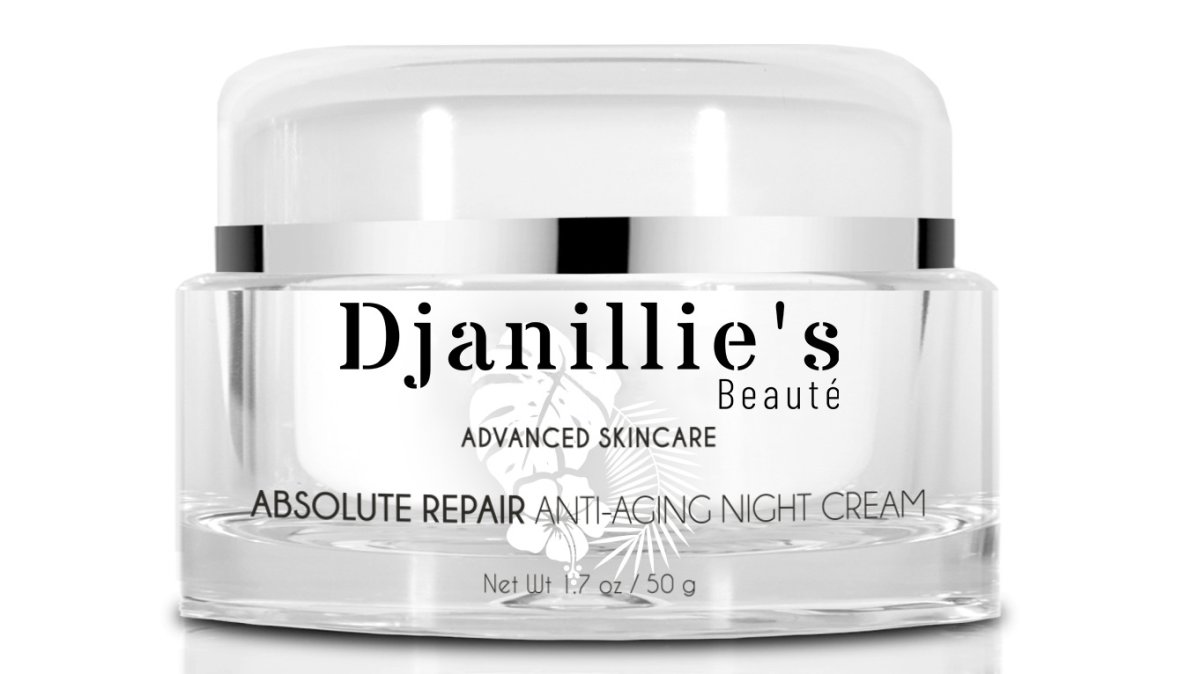
| Absolute Repair Anti-Aging Night Creme | $75.00 | Fine lines, loss of firmness | Overnight renewal |
| Holy Grail Gift Set | $179.99 | Full routine, multiple concerns | Anyone building a complete regimen |
How to Identify Endocrine Disruptors in Skincare
Learning how to identify endocrine disruptors in skincare starts with reading the ingredient list, not the front label. These chemicals can interfere with hormone function and appear under names most shoppers don't recognize.

Watch for these common offenders:
- Parabens (methylparaben, propylparaben, butylparaben)
- Phthalates, often hidden under "fragrance" or "parfum"
- Bisphenol A (BPA) in some plastic packaging
- Triclosan, an antibacterial agent
- Oxybenzone, a chemical sunscreen filter
The FDA's guidance on cosmetic ingredients explains that cosmetic companies aren't required to get pre-market approval for most ingredients, which puts the burden on you. That's why transparency in labeling matters more than any "clean" badge.
A practical rule: if a label lists "fragrance" without specifying the source, treat it as a potential phthalate carrier. Brands committed to clean standards disclose every component.
Natural Skincare for Diverse Skin Types: Matching Formulas to Your Concerns
Natural skincare for diverse skin types isn't one-size-fits-all. A formula that calms sensitive skin can be too light for mature skin, and a rich cream that rescues dryness can clog oily, acne-prone complexions.
Here's how to match formulas to your primary concern:
- Sensitive or reactive skin: Look for hypoallergenic, fragrance-free formulas with few active botanicals. Fewer ingredients means fewer triggers.
- Dry or mature skin: Prioritize cold-pressed oils, fermented ingredients, and ceramide-supporting botanicals that reinforce the skin barrier.
- Oily or combination skin: Choose non-comedogenic, lightweight serums with antioxidant-rich botanical extracts rather than heavy creams.
- Hyperpigmentation: Seek vitamin C derivatives, niacinamide, and fruit-pigmented actives that brighten without harsh bleaching agents.
The American Academy of Dermatology's skin care guidance notes that skin type and concern should drive product selection, not marketing claims. Patch-test any new product on your inner forearm for 48 hours before applying it to your face.
Ingredient-by-Ingredient: What Sets These Alternatives Apart
Most roundups of a 100 Percent Pure alternative for skincare stay at the brand level: this line is "cleaner," that line is "greener." That framing is useless when two ingredient decks look nearly identical. The real comparison happens molecule by molecule.
Preservative systems: the single biggest differentiator
Every water-based formula needs preservation, and the system a brand chooses says more than any front-label claim.
- Parabens (methylparaben, propylparaben, butylparaben): Broad-spectrum, cheap, and effective at very low concentrations, the class most clean brands are defined by avoiding.
- Phenoxyethanol: The most common paraben replacement. Effective against bacteria and yeast but weak against mold, so it's almost always paired with something else. FDA limit: 1% (the FDA).
- Sodium benzoate and potassium sorbate: Food-grade preservatives often used together in "natural" formulas. They work best at acidic pH, which constrains the formula.
- Radish root ferment filtrate (Leuconostoc): A fermentation-derived preservative that also acts as a humectant. Gentle, but typically needs a co-preservative for full coverage.
- Vitamin E (tocopherol) and rosemary extract: Antioxidants, not true preservatives. They slow oil rancidity but don't stop bacterial growth in water-based products, a label listing only these is a red flag.
Base oils and carrier systems
- Cold-pressed vs. refined: Cold-pressed oils retain more tocopherols and polyphenols but oxidize faster and carry more scent. Refined oils are more stable and nearly odorless, why fragrance-free lines use them.
- Comedogenic ratings matter more than reputation: Coconut oil is beloved in clean beauty but rates high on the comedogenic scale. Squalane, jojoba, and sunflower seed oil rate low, safer for acne-prone skin.
- Watch for "fragrance" or "parfum" as a catch-all: Under U.S. labeling rules, one word can hide dozens of undeclared compounds, including phthalates. If a brand won't disclose the source, assume the worst.
Active concentration and where it sits on the list
Ingredient lists are ordered by concentration down to 1%, after which order is the formulator's discretion:
- A hero botanical listed after the preservative is likely present at well under 1%.
- "Vitamin C" without a specified form, L-ascorbic acid, sodium ascorbyl phosphate, tetrahexyldecyl ascorbate, tells you nothing about stability or penetration. L-ascorbic acid is the most studied but most unstable; derivatives trade potency for shelf life.
- Niacinamide works at 2-5% for most people; higher concentrations raise irritation risk without proportional benefit.
Sourcing and traceability
Ask three questions of any brand you are considering:
- Can they name the region or farm for their signature botanicals?
- Do they publish a full INCI list rather than a marketing ingredient list?
- Do they disclose preservative percentages or at least the system used?
Brands that answer all three are rare, and that rarity is the point.
Djanillie's Beauté formulates with advanced, non-toxic compositions and carefully curated natural ingredients; every product is paraben-free and never tested on animals. To audit a specific product, start with the full INCI list, not the marketing copy.
Budget-Friendly vs. Premium: Finding Your 100 Percent Pure Alternative
Price in clean skincare isn't a reliable proxy for quality, but it is a reliable proxy for what you're paying for. Once you can name the cost drivers, you can decide which ones you care about, and swap at whatever tier fits your budget.
What actually drives the price
- Active concentration. A 15% vitamin C serum costs more to formulate than a 5% one; raw material cost scales with percentage.
- Sourcing and certification. Certified organic, fair-trade, or single-origin botanicals carry real premiums. COSMOS or USDA Organic certification alone adds meaningful cost per unit.
- Preservative complexity. Natural preservation is harder to stabilize, needs more testing, and often shortens shelf life, all raising unit cost.
- Packaging. Airless pumps, glass, and refillables cost more than basic plastic but protect unstable actives and reduce waste.
- Batch size. Small-batch production spreads fixed costs across fewer units.
A tiered swap framework
Use these tiers as a mental map, not a shopping list, know what a fair price looks like at each level so you can spot a markup.
Entry tier (roughly $15-$35 per product)
- Expect: a solid cleanser, a basic moisturizer, and a single-ingredient facial oil.
- Skip: high-percentage actives (vitamin C, retinol, peptides), the formulation budget usually isn't there to stabilize them well.
- Best use: building the foundation of a routine without overspending.
Mid tier (roughly $35-$75 per product)
- Expect: targeted serums with disclosed active percentages, better preservative systems, and traceable sourcing on at least the hero ingredient.
- Watch: "luxury" packaging that inflates price without improving the formula.
- Best use: treating one or two specific concerns, hyperpigmentation, fine lines, barrier repair.
Premium tier (roughly $75+ per product)
- Expect: clinical-level active concentrations, encapsulated delivery systems, third-party testing, and full sourcing disclosure.
- Watch: brands charging premium prices while hiding behind "fragrance" on the label. Price and transparency should move together.
- Best use: prescription-strength-adjacent actives unavailable at lower tiers, or a single hero product you'll use daily for months.
How to build a routine across tiers
You don't have to buy everything at one price point. A sensible pattern:
- Cleanser: entry tier, it's on your skin under a minute, so expensive actives are largely rinsed away.
- Serum: mid or premium tier, this is where actives do their work, so spend here.
- Moisturizer: mid tier, you want good barrier support, but the ingredient list is usually simpler than a serum's.
- Sunscreen: any tier, as long as you'll actually wear it daily. The best sunscreen is the one you reapply.
When a set beats buying individually
Bundles are worth it when the per-product price drops meaningfully and you'd have bought most items anyway. They're not worth it when they include a product you won't use, the "savings" evaporate the moment one item sits untouched.
Here's how that math plays out:
- Pure Radiance Anti-Aging Cleanser at $39.99 is a reasonable entry point to test a single product before committing to a line.
- Luminate Corrective Serum at $68.00 sits mid tier, the right place to spend if hyperpigmentation is your primary concern.
- Nutri-Lux Total Therapy Creme at $62.99 targets dryness and barrier repair, mid tier, and a sensible pairing with the serum.
- Absolute Repair Anti-Aging Night Creme at $75.00 tops the mid tier and is the pick if fine lines and firmness are the priority.
- Holy Grail Gift Set at $179.99 bundles the full routine. Run the per-product math; if you'd use four of the five, the set usually wins.
A note on "cheap" clean skincare
If a product claims clinical-grade actives, certified organic sourcing, and airless packaging at an entry-tier price, at least one claim is doing less work than the label suggests. The honest trade-offs are fewer actives, simpler preservation, or plainer packaging, knowing which one a brand made is more useful than knowing its price.

Making the Switch: A Simple Transition Routine
Transitioning to a new clean skincare line works best when you introduce products gradually. A sudden overhaul can trigger breakouts or irritation that makes you blame the new products when the real culprit is the shock to your routine.
Follow this four-week transition plan:
- Week 1: Replace your cleanser only. Keep your existing moisturizer and serum.
- Week 2: Add the new serum (like Luminate Corrective Serum) in the morning.
- Week 3: Swap in your new moisturizer (Nutri-Lux Total Therapy Creme for dry skin, or a lighter option for oily skin).
- Week 4: Introduce the Absolute Repair Anti-Aging Night Creme for overnight renewal.
Track how your skin responds each week. If irritation appears, pause the newest product and reintroduce it after a few days.

A common mistake is layering too many active botanicals at once. Give each product a full week before adding the next.
Switching to a clean skincare routine shouldn't mean gambling on formulas that irritate your skin or drain your budget. Djanillie's Beauté builds high-performance, non-toxic formulas for diverse skin types, and every purchase supports a mission: 30% of profits fund urban farming programs in Haiti. Explore the Absolute Repair Anti-Aging Night Creme, Luminate Corrective Serum, and the full Holy Grail Gift Set to build a routine that nourishes your skin and supports something bigger. Add to cart and start your transition today.
Frequently Asked Questions
Is 100 Percent Pure really non-toxic?
100 Percent Pure markets itself as a clean beauty brand, but 'non-toxic' is not a regulated term in the U.S. The FDA does not define it, so any brand can use it. What matters is the actual ingredient list. Look for paraben-free, sulfate-free, and phthalate-free formulas, and check whether preservatives are naturally derived. Reading labels yourself is the only reliable way to confirm a product's safety profile.
How do I identify endocrine disruptors in skincare?
Start with the ingredient list. Common endocrine disruptors include parabens (methylparaben, propylparaben), phthalates (often hidden under 'fragrance'), and certain UV filters like oxybenzone. Triclosan and BHA (butylated hydroxyanisole) are others to watch. If a label lists 'fragrance' without specifying sources, treat it as a possible phthalate carrier. Choosing products with full transparency in labeling makes this easier.
What are the best natural skincare products for sensitive skin?
Sensitive skin does best with short ingredient lists, no artificial fragrances, and non-comedogenic formulas. Look for hypoallergenic products with botanical extracts like aloe, chamomile, or oat. Patch-test any new product on your inner arm for 48 hours before applying it to your face. Products that are paraben-free, sulfate-free, and free of synthetic preservatives reduce the chance of irritation.
Are 100 Percent Pure alternatives as effective as the original?
Product efficacy depends on formulation, not brand name. A well-made alternative uses active botanicals, antioxidant-rich ingredients, and bio-available nutrients at effective concentrations. Look for dermatologist-tested options and check whether the brand discloses its full ingredient list.
How long does it take to switch to a new skincare routine?
Replace one product at a time, starting with your cleanser, then serum, then moisturizer. This lets you spot which product causes irritation if one does. If your skin is reactive, give each new product a full week before adding the next. A gradual switch also helps your skin barrier adjust without a purge period.