
Table of Contents
- Why Look for a Sienna Naturals Alternative for Textured Hair
- Feature Comparison: Clean Hair Care Options at a Glance
- Our Evaluation Criteria for Non-Toxic Textured Hair Products
- Makaya Curl Hair Creme: Daily Moisture for Coily Hair
- Curl Obsession Deep Treatment: Weekly Repair With Castor Oil
- Botanical Hydration Shampoo and Conditioner: A Sulfate-Free System
- How to Identify Endocrine Disruptors in Skincare and Haircare
- Match Your Hair Porosity to the Right Alternative
- Frequently Asked Questions
Last Updated: September 9, 2026
Why Look for a Sienna Naturals Alternative for Textured Hair
Many brands promise moisture but deliver buildup, leaving coily and curly hair feeling dry, heavy, or greasy. A Sienna Naturals alternative for textured hair can offer the same clean, effective care without the premium price tag or the guesswork.
At Djanillie's Beauté, we build high-performance formulas for diverse textures using carefully curated natural ingredients. Textured hair needs specific support: moisture retention, scalp health, and follicle support through non-toxic ingredients. Many popular lines rely on sulfates and synthetic additives that strip natural oils, leading to dryness and frizz.
Below, we'll show you how to evaluate clean hair care options, match products to your hair porosity, and avoid endocrine disruptors hiding in your routine.
Feature Comparison: Clean Hair Care Options at a Glance
Here is how Djanillie's Beauté's botanical line stacks up as a direct alternative for textured hair:
| Product | Price | Key Ingredients | Best For |
|---|---|---|---|
| Makaya Curl Hair Creme | $19.99 | Natural butters, botanical extracts | Daily moisture, curl definition |
| Curl Obsession Deep Treatment | $21.99 | Castor oil, nourishing botanicals | Weekly repair, strengthening |
| Botanical Hydration Shampoo | $19.99 | Sulfate-free cleansing agents | Gentle cleansing, scalp health |
| Botanical Hydration Conditioner | $20.99 | Hydrating botanicals | Detangling, slip, moisture lock |
| Botanical Hydration Starter Kit | $88.00 | Full system | First-time switchers |
The complete system is a budget-friendly alternative that does not compromise on ingredient quality.

Why These Ingredients Work for Textured Hair
Here is the mechanism behind the choices in this system.
Castor oil is a triglyceride of ricinoleic acid, a monounsaturated fatty acid with a molecular structure that penetrates the hair shaft rather than just coating it. For tightly coiled hair (Type 4), which has a fragile cuticle, this penetration is critical. Ricinoleic acid also has anti-inflammatory properties that soothe scalp irritation. In the Curl Obsession Deep Treatment, it works as a humectant, drawing moisture into the strand while providing slip for detangling without synthetic polymers.
Natural butters (like shea and mango) are rich in oleic and stearic acids, which fill gaps in the cuticle of high-porosity hair, smoothing the surface and reducing frizz. Unlike dimethicone, these butters are not occlusive, silicones form a plastic-like film that blocks moisture, while butters allow some moisture exchange. This is why the Makaya Curl Hair Creme defines curls without the 'crunch' or 'slip' of some styling products.
Sulfate-free cleansing agents (like sodium cocoyl isethionate or decyl glucoside) have larger molecular structures than sulfates, so they cannot strip the natural lipid layer (18-MEA) that protects each strand. Sulfates remove the sebum your scalp produces, leading to a cycle of overproduction and dryness. The Botanical Hydration Shampoo uses these gentler surfactants to remove buildup without disrupting the scalp's microbiome.
Ingredient Transparency and the 'Fragrance' Loophole
A key differentiator in this system is full ingredient disclosure. Under the Fair Packaging and Labeling Act (21 CFR 101), the FDA requires cosmetics to list ingredients, but it permits the term 'fragrance' to mask a proprietary blend of chemicals. Many of these undisclosed chemicals are phthalates, which are used to make scents last longer. The FDA guidance on cosmetic labeling clarifies that fragrance components do not need to be individually listed. This system uses naturally derived scents from botanical extracts, which are listed transparently, avoiding the 'fragrance' loophole entirely.
Budget vs. Performance: The Real Trade-Off
This system is priced to make clean, non-toxic care a sustainable habit. The Botanical Hydration Starter Kit at $88 provides roughly 30 to 40 washes, bringing the cost to under $3 per wash day, critical for textured hair, which requires more product per application.
Our Evaluation Criteria for Non-Toxic Textured Hair Products
We evaluated these options against five non-negotiable criteria. First, the formula must be sulfate-free, since sulfates strip natural oils. Second, we look for plant-based humectants and emollients that support moisture retention rather than synthetic silicones that cause buildup.
Third, the formula must support scalp health, since balanced sebum protects hair elasticity. Fourth, we prioritize formulations safe for color-treated hair and sensitive skin. Finally, products must deliver slip for detangling without weighing down fine or low-density hair.
Makaya Curl Hair Creme: Daily Moisture for Coily Hair
Makaya Curl Hair Creme is our top pick for daily moisture on coily and curly hair. Priced at $19.99, it provides slip for detangling while locking in hydration without greasy buildup, rich enough for coarse hair but light enough to avoid weighing down curls.
Apply it to damp hair in sections, working from root to tip for curl definition and frizz control. A common mistake is applying too much to dry hair, which leads to flaking. Start with a small amount and add more only if your hair feels dry.
It also works well for refresh days, a pea-sized amount smoothed over the surface can help revive definition.
Curl Obsession Deep Treatment: Weekly Repair With Castor Oil
Curl Obsession Deep Treatment with castor oil is the weekly repair step your routine is missing. At $21.99, it targets hair thinning concerns and damage through castor oil's strengthening properties.

Apply it generously to clean, damp hair, focusing on mid-lengths and ends. Cover with a shower cap and allow botanicals to penetrate for 15 to 20 minutes. Rinse with cool water to seal the cuticle and enhance shine.
Deep conditioning is not optional for textured hair, the tight curl pattern makes it harder for natural oils to travel down the strand. This treatment can help improve elasticity and reduce breakage over time.
Botanical Hydration Shampoo and Conditioner: A Sulfate-Free System
The Botanical Hydration Shampoo ($19.99) and Botanical Hydration Conditioner ($20.99) form a complete sulfate-free system. The shampoo cleanses gently without stripping protective oils; the conditioner delivers slip and moisture for pain-free detangling.

This system supports a gentler rhythm, cleansing every 7 to 10 days while maintaining moisture balance and managing product buildup without harsh surfactants.
For families managing children's curly hair, this system is gentle enough for sensitive scalps. The shampoo lathers modestly, which is normal for sulfate-free formulas, and the conditioner provides slip to work through tangles.
How to Identify Endocrine Disruptors in Skincare and Haircare
Learning how to identify endocrine disruptors in skincare and haircare is essential for anyone switching to clean beauty. These chemicals interfere with hormone function and hide in many conventional products under innocuous names.
Start by scanning for these common offenders: phthalates often appear as "fragrance," parabens end in "-paraben" (methylparaben, propylparaben), and certain preservatives like BHA and BHT are flagged in clean beauty circles. The FDA guidance on cosmetic ingredients explains that while the agency regulates cosmetics, it does not require pre-market approval for most ingredients, making label literacy your first defense.
The Environmental Working Group's Skin Deep database provides a searchable resource for checking ingredient safety ratings. When you find a product with a long list of unpronounceable chemicals, a plant-based alternative with transparent sourcing is usually the safer bet. This is particularly important for pregnant women and children, whose developing systems are more vulnerable to hormone disruption.
Match Your Hair Porosity to the Right Alternative
Hair porosity determines how well your strands absorb and retain moisture, making it the deciding factor in product selection. Low porosity hair has tightly bound cuticles that resist moisture; high porosity hair has raised cuticles that absorb water quickly but lose it just as fast.
The Porosity Spectrum: Not Just Low or High
Porosity is a spectrum, not a binary. There is 'normal' porosity, where the cuticle lies flat, and 'mixed' porosity, common in chemically treated or heat-damaged hair, where roots behave like low porosity and ends like high porosity. This is why a single product often fails across the entire head.
The National Institutes of Health overview of hair structure explains that the cuticle's condition directly affects moisture management strategies. The cuticle is composed of overlapping cells that act like shingles on a roof. When those shingles are flat and tightly packed, water and oils cannot easily pass through. When they are lifted or missing, water enters quickly but also escapes just as fast.
How to Test Porosity Without the Float Test Fallacy
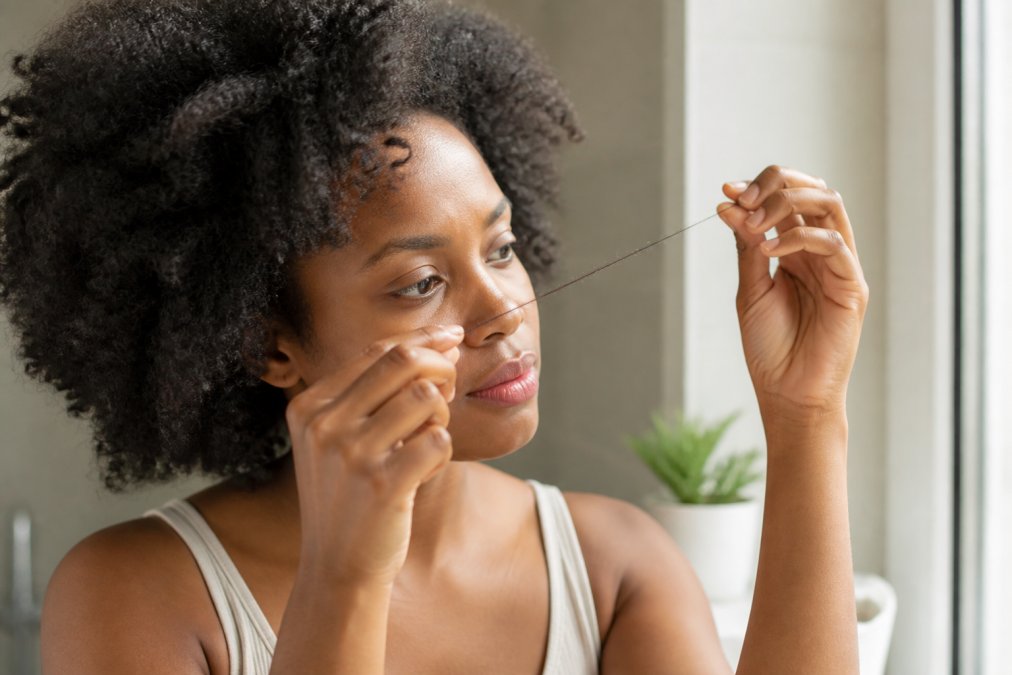
The classic 'float test' is unreliable because natural oils cause hair to float regardless of porosity. A more accurate method is the slip test: take a clean, dry strand between your thumb and index finger and slide from tip to root. If it feels smooth, you likely have low porosity; if it feels rough or catches, the cuticle is raised, indicating high porosity.
A second method is the water absorption test: spray a section of hair with water. If it beads up for more than a minute, you have low porosity; if it absorbs within 10 to 15 seconds, you have high porosity.
Product Selection by Porosity, Not Just Curl Type
Curl type (2A through 4C) tells you about the shape of the strand, but porosity tells you about the condition of the cuticle. Two people with 4C hair can have opposite porosity profiles and need different products.
Low Porosity (Tightly Bound Cuticles)
Low porosity hair is prone to buildup because the cuticle resists penetration. Heavy butters sit on the surface, causing greasiness. The solution is lightweight, water-based products with humectants like glycerin or aloe vera juice. The Makaya Curl Hair Creme uses botanical extracts lighter than heavy butters, allowing moisture absorption without residue. Apply to soaking wet hair, the water helps lift the cuticle slightly. Avoid products with high amounts of coconut oil or shea butter as a primary ingredient.
High Porosity (Raised or Missing Cuticles)
High porosity hair, often the result of chemical processing or heat styling, has gaps in the cuticle that allow moisture to escape, leading to chronic dryness. The Curl Obsession Deep Treatment with castor oil is ideal because ricinoleic acid is small enough to penetrate the gaps and provide internal strengthening. Follow with a heavier butter-based product to seal the cuticle. Protein treatments are beneficial but should be used sparingly, overuse can lead to stiffness.
Normal Porosity (Healthy, Flat Cuticles)
Normal porosity hair accepts and retains moisture readily. The Botanical Hydration system provides balanced cleansing and conditioning without over-moisturizing. A weekly deep treatment is sufficient to maintain elasticity and shine.
Building a Porosity-Based Routine
Your porosity should dictate which products you use and how often.
- Low porosity: Wash every 10 to 14 days. Use warm water to help lift the cuticle. Apply conditioners and treatments with heat (a shower cap or hooded dryer) to encourage penetration. Avoid heavy oils as sealants.
- High porosity: Wash every 5 to 7 days. Use cool water to help flatten the cuticle. Apply leave-in conditioners and sealants immediately after washing while the hair is still damp. Incorporate a protein treatment every 4 to 6 weeks.
- Normal porosity: Wash every 7 to 10 days. Maintain a balanced routine with regular moisture and occasional protein.
The Role of the Scalp in Porosity Management
The American Academy of Dermatology guidance on hair care emphasizes that healthy hair starts with a healthy scalp. Sebum production varies by individual, but the scalp's natural oils are the first line of defense against moisture loss. For low porosity hair, the scalp's sebum often cannot travel down the strand because the cuticle is too tight, so it accumulates at the root, leading to a greasy scalp and dry ends. For high porosity hair, the sebum travels down but evaporates quickly from the damaged cuticle. This is why scalp care is not separate from porosity management, it is the foundation. The Botanical Hydration Shampoo is designed to cleanse the scalp without stripping it, preserving the natural sebum that supports overall hair health.
Frequently Asked Questions
What type of shampoo does textured hair require?
Textured hair needs a sulfate-free, moisturizing shampoo that cleanses without stripping natural oils. Sulfates create heavy suds but leave curly and coily hair dry and prone to breakage. Look for plant-based cleansers like the Botanical Hydration Shampoo, which removes product buildup while preserving sebum that keeps curls defined. A gentle cleansing system supports scalp health and follicle support, which matters for hair growth and elasticity.
How do I choose a non-toxic shampoo for textured hair?
Start by scanning the ingredient list for common endocrine disruptors like phthalates, parabens, and synthetic fragrances. Choose a formula labeled sulfate-free and silicone-free, since silicones can cause buildup that blocks moisture. The Botanical Hydration Shampoo uses plant-based ingredients that clean without harsh detergents. Match the formula to your hair porosity: low-porosity hair needs lighter cleansers, while high-porosity hair benefits from more emollient ingredients.
What ingredients should I avoid in textured hair products?
Avoid sulfates like sodium lauryl sulfate, parabens, phthalates, and synthetic fragrances, which can disrupt hormones and irritate the scalp. Drying alcohols like SD alcohol and denatured alcohol pull moisture from the hair shaft. Heavy silicones such as dimethicone create buildup that suffocates the follicle over time. For textured hair, choose plant-based butters and oils that support moisture retention without coating the strand.
Are there affordable alternatives to premium clean haircare brands?
Yes. The Makaya Curl Hair Creme costs $19.99 and the Botanical Hydration Shampoo is $19.99, both under the typical $25-$30 price point for premium clean brands. The Botanical Hydration Starter Kit bundles shampoo, conditioner, and curl enhancer for $88.00, which saves about 15% compared to buying each item separately. These options deliver the same sulfate-free, non-toxic standards without the luxury markup.
What makes a haircare brand truly 'clean' for textured hair?
A truly clean brand avoids known endocrine disruptors and uses plant-based ingredients that actually penetrate the hair shaft rather than just coating it. Look for transparent labeling, third-party testing, and clear statements about what is excluded. The brand should also address textured hair specifically, not just add curly hair photos to generic formulas. Ethical sourcing and social impact, like Djanillie's Beauté donating 30% of profits, indicate a mission-driven approach rather than greenwashing.