


Table of Contents
- Understanding Hair Breakage: Internal vs. External Damage
- Best Natural Oils for Hair Breakage Prevention
- Proper Hair Washing and Conditioning Techniques
- How to Detangle Hair Without Breakage
- Protective Styling and Heat Protection Strategies
- Nutrition, Sleep, and Scalp Health for Strong Hair
- Common Mistakes That Cause Hair Breakage
- Conclusion
- Frequently Asked Questions
Last Updated: September 4, 2026
Hair breakage undoes months of growth in a single styling session. Preventing it naturally requires understanding the difference between internal damage (nutrient deficiency, hormonal shifts) and external damage (chemical processing, heat, friction). At Djanillie's Beauté, we formulate for diverse textures, targeting both the structural integrity of the hair shaft and the daily mechanical stress it endures.
Most breakage stems from moisture loss and protein deficiency, which weakens elasticity. You can reverse this damage with a routine built on natural oils, gentle handling, and proper nutrition.
Understanding Hair Breakage: Internal vs. External Damage
Hair breakage is the physical snapping of the hair shaft, caused by a weakened cuticle. Identifying which of two damage types you're fighting, internal or external, determines the remedy.
Internal breakage stems from nutrient deficiency, hormonal shifts, or health conditions; no topical oil fixes these root causes. External breakage results from chemical processing, heat, and friction. To tell them apart: split or frayed ends indicate external damage; clean snaps with no taper suggest internal weakness.
Best Natural Oils for Hair Breakage Prevention
The best natural oils penetrate the hair shaft rather than coat it. Coconut oil binds to hair protein and reduces protein loss during washing (peer-reviewed research). Olive oil and avocado oil offer similar benefits for thicker, coarser textures.
Apply oils to damp hair, focusing on mid-lengths and ends where the cuticle is oldest. Avoid saturating the scalp, as excess oil can clog follicles. The BioForce Strengthening Serum from Djanillie's Beauté combines botanical actives to reinforce the hair shaft and improve elasticity.

How to Use Rosemary Oil for Hair Growth at Home
Rosemary oil improves circulation to the follicle and supports thicker growth. Always dilute a few drops in a carrier oil like jojoba or sweet almond, as undiluted essential oils can irritate the scalp.
Massage the warmed mixture into the scalp using circular motions for five minutes to encourage blood flow and distribute sebum. Leave on for at least 30 minutes before shampooing, or overnight under a shower cap for deeper penetration.
Proper Hair Washing and Conditioning Techniques
Focus shampoo on the scalp only, letting suds rinse through the lengths rather than piling hair on top of the head. Use warm water to open the cuticle, then finish with a cool rinse to seal it and boost shine.
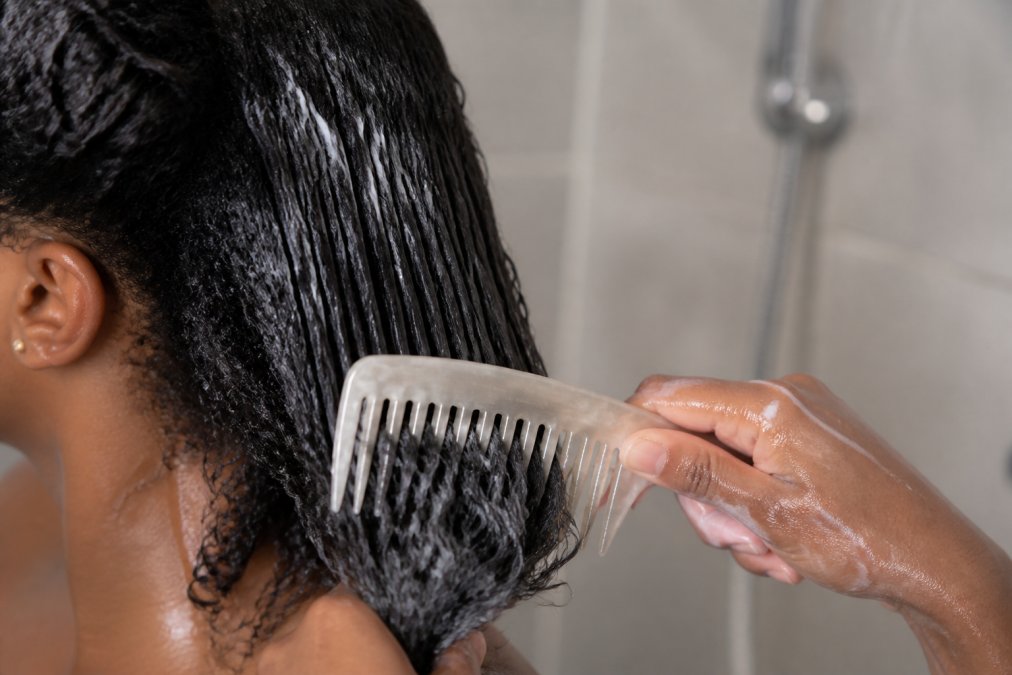
Conditioning is essential for breakage prevention. Squeeze out excess water before applying conditioner, then use a wide-tooth comb to distribute evenly. Use the Hair Resurrection Treatment from Djanillie's Beauté weekly or biweekly for intensive repair.

How to Detangle Hair Without Breakage
Detangling is the highest-risk moment for mechanical stress. Always detangle on wet, conditioned hair, wet strands are far more pliable. Apply generous detangler or leave-in conditioner, then work through small sections with a wide-tooth comb.
Begin at the ends and work upward, holding the section taut to prevent follicle strain. Never rip through knots; apply more product and work tangles free with your fingers first. The Nourish Me Detangler by Djanillie's Beauté minimizes breakage on fragile textures.
Protective Styling and Heat Protection Strategies
Protective styling reduces friction and manipulation. Loose braids, twists, and buns give strands a break from daily stress. Keep styles loose enough to avoid tension alopecia, and re-moisturize every few days.
Use a heat protectant when heat is unavoidable. Set tools to the lowest effective temperature and never pass over the same section twice. Air-drying is gentlest; if needed, use a microfiber towel instead of cotton to reduce friction.
Nutrition, Sleep, and Scalp Health for Strong Hair
Hair reflects internal health. Protein builds keratin; iron and vitamins A, C, and D support follicle cell division. Biotin, zinc, and omega-3 fatty acids maintain elasticity and reduce breakage (the NIH). A blood test can identify deficiencies worth supplementing.
A healthy scalp produces sebum that naturally conditions hair. Massage your scalp for five to ten minutes, two to three times per week, using gentle circular motions with your fingertips to increase blood flow and loosen buildup.
Sleep Hygiene and Nighttime Hair Protection
Most hair care guides overlook nighttime damage. Cotton pillowcases create friction that frays and breaks strands, undoing daytime care, especially for curly, coily, and textured hair.
Switch to a satin or silk pillowcase, one of the highest-impact, lowest-effort changes. Satin and silk reduce mechanical breakage and retain moisture, while cotton wicks it away. If inaccessible, a silk or satin sleep bonnet achieves the same effect for less cost.
Style your hair loosely before bed, a loose pineapple bun or braid prevents tangling. Avoid tight ponytails or clips; eight hours of pressure weakens follicles. If using a bonnet or wrap, ensure it's loose enough to fit a finger underneath.
For fragile or highly porous hair, apply a lightweight leave-in conditioner or oil before bed for extra moisture protection, especially in winter or dry climates. Combine a satin pillowcase, loose protective style, and light moisture treatment for a complete nighttime routine.
Common Mistakes That Cause Hair Breakage
The most common mistake is skipping regular trims. Split ends travel up the shaft and cause more breakage than a trim every eight to twelve weeks prevents (the American Academy of Dermatology). Professional trims remove weakened ends before they snap higher, actually preserving more length.
Avoid elastics with metal joins or tight ponytails. Use spiral hair ties or silk scrunchies to distribute tension evenly. Minimize over-manipulation, as constant re-styling weakens the cuticle.
Understanding Your Hair Porosity to Prevent Breakage
Many routines fail because people don't understand their hair's porosity, its ability to absorb and retain moisture. If your porosity doesn't match your products, even the best oils and treatments will either sit unused or fail to provide lasting moisture. This mismatch is why one person's miracle oil makes another's hair feel greasy.
Identify your porosity in five minutes using the float test. Fill a glass with room-temperature water, pluck strands directly from your scalp, drop them in, and observe how quickly they sink.
Low porosity hair floats or sinks slowly; cuticles are tightly sealed. Products sit on top rather than penetrate. Use lightweight oils like jojoba or argan, apply heat before conditioning to open cuticles, and avoid protein-heavy treatments that build up.
Medium porosity hair sinks at a moderate pace, usually within one to two minutes. This is the most balanced porosity type, and most commercial hair products are formulated for medium-porosity hair. If you have medium porosity, you have flexibility in product choice, but you still need to maintain a balance between moisture and protein to prevent breakage. Alternate between moisturizing and protein treatments every one to two weeks.
High porosity hair sinks immediately; cuticles are raised or gapped. Moisture enters easily but escapes fast. Use heavy creams, butters, and protein treatments to seal cuticles. Leave-in conditioners are essential; avoid lightweight oils alone.
Knowing your porosity stops wasted spending and ensures every product works with your hair's structure. High-porosity hair needs heavy products; low-porosity hair needs lightweight ones.
Conclusion
Preventing breakage naturally is less about any single miracle product and more about a consistent, low-manipulation routine that respects your hair's needs. Focus on internal nutrition, gentle detangling, and protective styling, and your hair will retain the length it grows. The Hair Repair Duo from Djanillie's Beauté pairs a strengthening serum with a deep treatment to address both protein loss and moisture deficiency in one routine, supporting the diverse textures we formulate for with non-toxic, botanical ingredients.

Frequently Asked Questions
What is the biggest cause of hair breakage?
Mechanical stress from rough handling, tight hairstyles, and friction is a leading cause of hair breakage. Heat styling, chemical processing, and moisture loss also contribute significantly. Internal factors like nutritional deficiencies and hormonal changes can weaken the hair shaft, making it more prone to breaking. Identifying whether your breakage is mechanical or internal helps you target the right prevention strategy.
Which natural oils are best for preventing hair breakage?
Rosemary, coconut, argan, and jojoba oils are among the effective natural oils for preventing hair breakage. Rosemary oil stimulates the scalp and strengthens hair follicles, while coconut oil provides deep moisture and reduces protein loss. Argan oil improves hair elasticity, and jojoba oil mirrors the scalp's natural sebum to lock in hydration. Apply these oils as pre-shampoo treatments or leave-in conditioners to reduce friction and strengthen the hair shaft.
How can I stop my hair from breaking off if I have curly or coily hair?
Curly and coily hair types are more prone to breakage because of their natural texture and shape. Use a wide-tooth comb on wet, conditioned hair to detangle gently. Apply deep conditioning treatments weekly, use protective styling to reduce daily manipulation, and avoid heat styling when possible. Sleep on a silk pillowcase or use a silk bonnet to reduce friction. Products like the Hair Repair Duo provide intensive moisture and protein balance to strengthen curls and coils.
What vitamin deficiencies cause hair breakage?
Iron, zinc, biotin, vitamin D, and B vitamins are essential for healthy hair growth and strength. Deficiencies in these nutrients can weaken the hair shaft and increase breakage. If you suspect nutritional deficiency, consult a healthcare provider for testing. Eating protein-rich foods, leafy greens, nuts, seeds, and fatty fish supports hair health from within. Supplements may help, but a balanced diet is the foundation for preventing breakage related to nutrient deficiency.
Building a routine that prevents breakage takes patience, but the payoff is longer, stronger hair that reflects your health. At Djanillie's Beauté, we create high-performance, natural formulas designed for coils, curls, and waves, while donating 30% of profits to support urban farming in Haiti. Get started with the Hair Repair Duo and give your strands the strengthening care they need to thrive.